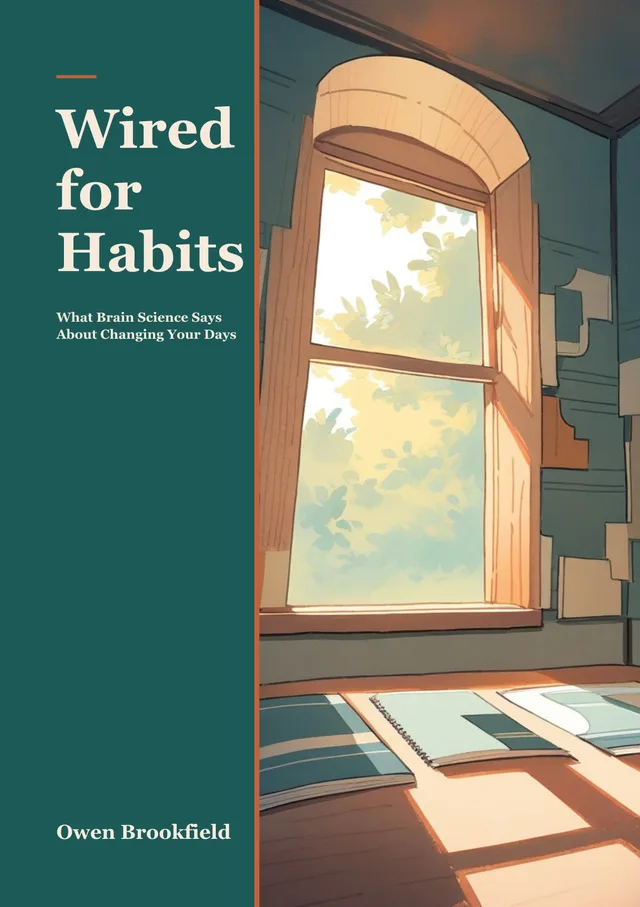
Wired for Habits

by Owen Brookfield

Trinity Books · October 28, 2026

What brain science really says about building good habits and breaking old ones.

Reading time: About 4 h 10 min (at 230 words a minute)

Read it in another language · 10

Read on the web (can be saved for offline reading). Open it from My books after purchase.

$15.70 tax included

DeliveryIn your bookshelf right after purchase

Length280 pages

You can choose and buy any language edition here (this page stays in your language).

Choose a format

Details

AuthorUnited Kingdom Owen Brookfield
CategoryHabits / Introduction to psychology / Reaching goals
Language of the bookEnglish
PublishedOctober 28, 2026
Length280 pages
Product numberTB-K0005-EN
Reading timeAbout 4 h 10 min (at 230 words a minute)
Print-ready PDFA5 · interior PDF and cover PDF (with bleed: two versions, 3 mm and 3.175 mm, can be downloaded.) · 280 pages

Categories of this book

CategoriesSelf-help and workHabits

CategoriesLearning and general knowledgeIntroduction to psychology

CategoriesSelf-help and workReaching goals

About this book

Why do you drive to the wrong place on autopilot, reach for your phone without deciding to, or keep a resolution for three weeks and then lose it? Wired for Habits explains, in plain language, what brain science and psychology have learned about how habits form, why they are so hard to change and what actually helps.

What brain science really says about building good habits and breaking old ones.

In fifteen chapters, the book covers the brain systems behind automatic behaviour, the cues that trigger habits, the role of reward and dopamine, how long habits really take to form, what the debate about willpower means for you, how to design your surroundings, if-then plans, replacing rather than fighting unwanted habits, sleep and stress, starting small, the influence of other people, how to recover from slips and why it is never too late to change.

The book is honest about the evidence. It explains which findings are well established and which are still debated, and it corrects popular myths such as the twenty-one-day rule and the simple story of the marshmallow test. Each chapter follows people of different ages and lives as they build or change one habit, and ends with practical steps, a short exercise and a summary.

Contents

  • Wired for Habits
  • Introduction
  • How to Use This Book
  • A Note on Care
  • Chapter 1: Why So Much of Your Day Runs on Autopilot
    1. The Drive to the Old Office
    2. Two Ways the Brain Gets Things Done
    3. What Animal Studies Revealed
    4. Why the Brain Loves Habits
    5. Dumisani's Clean Hands
    6. Élodie Learns to Drive
    7. Rufus and the Half-Past-Five Alarm
    8. Practical Steps: Noticing Your Autopilot
    9. Habits Are Not Mindless, and Not Destiny
    10. A Short Exercise: A Day on Autopilot
    11. Chapter Summary
  • Chapter 2: Cues: The Hidden Triggers Around You
    1. Three O'Clock and the Biscuit Tin
    2. What Is a Cue?
    3. The Power of Context
    4. Matilde Becomes a Cue Detective
    5. Arnav and the Queue
    6. Gisela and the Evening Sofa
    7. Practical Steps: Working With Cues
    8. Cues Are Not Commands
    9. A Short Exercise: The Cue Detective's Notebook
    10. Chapter Summary
  • Chapter 3: Reward, Dopamine and Why Some Habits Stick
    1. Just One More Look
    2. How Rewards Build Habits
    3. What Dopamine Really Does
    4. The Pull of the Unpredictable
    5. Florin Changes His Rewards
    6. Imke and the Walk With a Story
    7. Kaveh and the Evening Reward
    8. Practical Steps: Working With Rewards
    9. The Myth of the Dopamine Detox
    10. A Short Exercise: A Reward Audit
    11. Chapter Summary
More
  • Chapter 4: The Truth About Twenty-One Days
    1. Day Twenty-Two
    2. Where the Myth Came From
    3. What Researchers Found
    4. Nadège Starts Again
    5. Bilal and the Long Road to Running
    6. Wanda's Morning Stretch
    7. Kasimir and the Train
    8. Practical Steps: Giving Habits the Time They Need
    9. Automatic Is Not the Same as Permanent
    10. A Short Exercise: The Automaticity Diary
    11. Chapter Summary
  • Chapter 5: Willpower Is Not the Whole Story
    1. The Evening Battle
    2. The Rise and Fall of a Popular Idea
    3. What People With Good Self-Control Actually Do
    4. Callum Moves the Battle
    5. Thabo and the Gym Bag
    6. Mirjam and the Shopping Trolley
    7. Ollie and the Phone in the Kitchen
    8. Practical Steps: Using Willpower Wisely
    9. Willpower Still Matters, and Circumstances Matter Too
    10. A Short Exercise: Mapping Your Battles
    11. Chapter Summary
  • Chapter 6: Designing the Rooms You Live In
    1. Books in Boxes
    2. How Surroundings Shape Behaviour
    3. Making the Good Easy and the Unhelpful Hard
    4. Chinwe's Kitchen
    5. Bram's Desk
    6. Pilar's House
    7. Practical Steps: Redesigning Your Surroundings
    8. Design Is Powerful, but Not Magic
    9. A Short Exercise: A Room Walk
    10. Chapter Summary
  • Chapter 7: If-Then Plans: Deciding Before the Moment Comes
    1. "I Will Floss More"
    2. The Gap Between Intention and Action
    3. What the Research Shows
    4. Rahim's Plans
    5. Siobhan and the Meeting
    6. Mehmet's Walk After Lunch
    7. Lukas and the Maths Book
    8. Practical Steps: Making If-Then Plans
    9. Plans Are Tools, Not Guarantees
    10. A Short Exercise: Three If-Then Plans
    11. Chapter Summary
  • Chapter 8: Breaking a Habit Without Fighting Yourself
    1. Hands That Find Their Way Back
    2. Why Fighting Often Backfires
    3. Replace, Do Not Erase
    4. Josefa's New Hands
    5. Hamish and the Interruptions
    6. Lior and the News
    7. Practical Steps: Changing Habits Gently
    8. When the Old Habit Comes Back
    9. A Short Exercise: Replace, Do Not Erase
    10. Chapter Summary
  • Chapter 9: Sleep, Stress and the Tired Brain
    1. When Good Habits Fall Apart
    2. The Tired Brain
    3. Stress and the Retreat to Routine
    4. Abdi Puts Sleep First
    5. Margarita in the Hard Months
    6. Sven and the Late Nights
    7. Practical Steps: Protecting the Foundations
    8. Sleep Advice Does Not Fit Every Life
    9. A Short Exercise: A Sleep and Habit Diary
    10. Chapter Summary
  • Chapter 10: What the Marshmallow Test Really Showed
    1. A Father's Worry
    2. The Original Studies
    3. The Follow-Up and the Later Questions
    4. Tiago Looks Again
    5. Akosua and the Long Course
    6. Hakan and the Reliable Workplace
    7. Practical Steps: Learning to Wait
    8. Self-Control Is Not Destiny
    9. A Short Exercise: Your Waiting Toolkit
    10. Chapter Summary
  • Chapter 11: Starting Small
    1. The Book That Was Never Begun
    2. Why Small Behaviours Become Habits More Easily
    3. Small Successes and Growing Confidence
    4. Juliet's Two Sentences
    5. Ruairí and the Kitchen Counter
    6. Nao and Two Minutes of Tidying
    7. Leontine and One Bird a Week
    8. Practical Steps: Starting Small
    9. Small Is a Beginning, Not a Limit
    10. A Short Exercise: Shrink It
    11. Chapter Summary
  • Chapter 12: Habits Are Contagious: The People Around You
    1. Lunch at the Desk
    2. Doing What Others Do
    3. The Power of Shared Routines
    4. Kelechi and the Lunch Group
    5. Magda and the Family Table
    6. Raúl and the Study Group
    7. Dorit and the Walking Group
    8. Practical Steps: Using the Social Side of Habits
    9. Influence Is Not an Excuse, and Not Always Kind
    10. A Short Exercise: A Map of Your Habit Company
    11. Chapter Summary
  • Chapter 13: Slips, Lapses and Starting Again
    1. One Missed Week
    2. A Lapse Is Not a Relapse
    3. Kindness or Criticism?
    4. Bart and the Party
    5. Mariela and the Language Practice
    6. Aurora After the Hospital
    7. Practical Steps: Responding to Lapses
    8. Kindness Is Not an Excuse, and Some Lapses Need Help
    9. A Short Exercise: A Plan for Slips
    10. Chapter Summary
  • Chapter 14: Never Too Late: Habits Across a Lifetime
    1. "I Am Too Old to Learn"
    2. The Changing Brain
    3. Life Transitions as Windows
    4. Ludmila Learns to Swim
    5. Jonah and the Bedtime Routine
    6. Sienna Starts University
    7. Hartmut and the Empty Days
    8. Practical Steps: Changing at Any Age
    9. Brain Training and Other Promises
    10. A Short Exercise: Your Transition Window
    11. Chapter Summary
  • Chapter 15: Building Days You Want to Live In
    1. A Different First Hour
    2. What We Have Learned About the Brain and Habits
    3. Choosing Which Habits Matter
    4. Yusra and the Twelve Resolutions
    5. Pieter and the Sunday Review
    6. Amani and What Matters
    7. Practical Steps: Building Your Days
    8. What This Book Cannot Do
    9. A Short Exercise: A Plan for the Next Three Months
    10. Chapter Summary
  • Closing Words
  • About the Science in This Book
  • The Tools of This Book in One Place
  • Using This Book With Others
  • About the Author
  • A Note on Care
  • Colophon

Read it in another language

You can buy any language edition on this page: choose it under “Language of the book” in the buy box above. Each language also has its own page.

Refunds and contact

DeliveryRead on the web (can be saved for offline reading). Open it from My books after purchase.
Refunds and contactFor refunds and cancellations of e-books, please see these pages. 返金について · お問い合わせ · Questions and answers