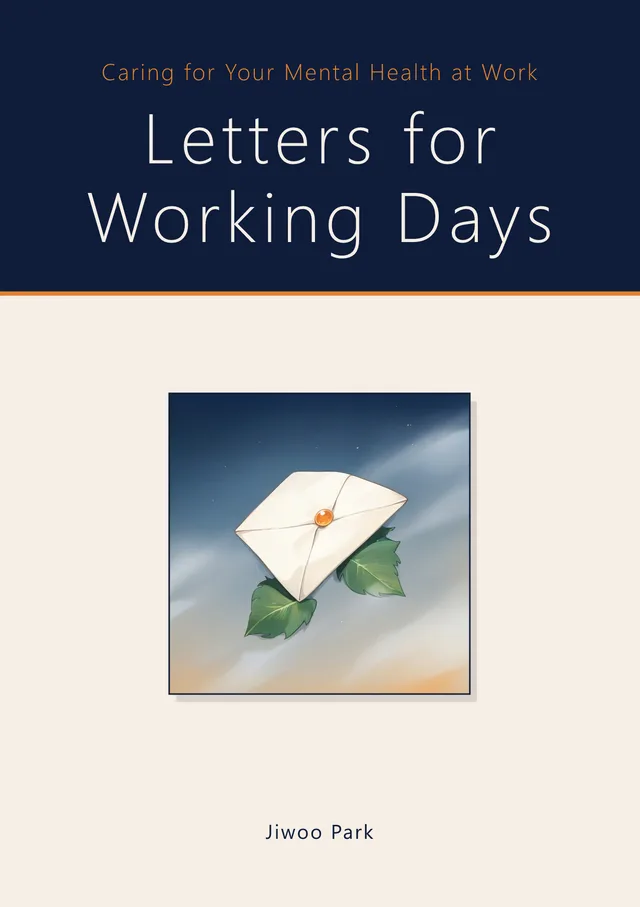
Letters for Working Days
$12.90 tax included
DeliveryIn your bookshelf right after purchase
Length230 pages


$12.90 tax included
DeliveryIn your bookshelf right after purchase
Length230 pages
A5 (148 × 210 mm) · 230 pages
The price, shipping and delivery time depend on the destination country (tax included).
If the book is misprinted, damaged in transit or the wrong book, please contact us within 30 days of delivery. We will reprint it and send it again free of charge. Printed books are shipped from a printer in a country near the destination. When the printer's country and the destination differ, customs duties, taxes or clearance fees may be charged on delivery and are paid by the customer.
Copies to Japan are printed in Japan by the Japanese printer 製本直送.com (Seichoku) and sent by a Japanese carrier (no customs duties; the delivery date and time cannot be chosen, and post-office pickup is not available).
The print-ready PDFs of this book (interior and cover). Print and bind one copy for yourself at home, at a print shop or with a print-on-demand service.
A5 · interior PDF and cover PDF (with bleed: two versions, 3 mm and 3.175 mm, can be downloaded.) · 230 pages
Print-ready PDF$3.50
For your own personal use only. You may print and bind it for yourself, including through a print service. You may not share, publish or sell the PDF or the printed copy. A PDF you bought stays downloadable from My books, also after your access to Trinity MemberMonthly membership ends.
Available with Trinity MemberMonthly membership. About Trinity Member
| Author | South Korea Jiwoo Park |
|---|---|
| Category | Mental health / Letters and diary fiction / Calming the mind |
| Language of the book | English |
| Published | October 25, 2026 |
| Length | 230 pages |
| Product number | TB-W0002-EN |
| Reading time | About 3 h 30 min (at 230 words a minute) |
| Print-ready PDF | A5 · interior PDF and cover PDF (with bleed: two versions, 3 mm and 3.175 mm, can be downloaded.) · 230 pages |
CategoriesHealth and bodyMental health
Fourteen working people write about what weighs on them at work — stress, long hours, worry, a low mood, exhaustion, anger, loneliness, unfair treatment, leading others, a struggling colleague, the pull of home, big changes and the fear of asking for help — and each one receives a long, warm reply. A book of letters that compares what different public sources say about mental health at work and brings ordinary working days from around the world into every page.
See the full description of this edition
Fifteen letters for anyone whose mind goes to work with them every day.
A nurse whose stress keeps growing. A delivery driver who never rests. An accountant who dreads every meeting. A teacher who has felt flat for weeks. A restaurant owner running on empty. In this book, people from many kinds of work write about what is happening to their minds at work, and every letter receives a long, thoughtful reply.
The replies do not offer one simple rule. They compare what different kinds of sources say — public mental health guides, international organizations that work on health and on work, psychology textbooks, the public information of helplines, general explanations of research and old traditional sayings — and show where those sources agree and where they look at the same problem from different sides. Along the way, the letters visit ordinary working days around the world: a harbour before dawn, a market at noon, a hospital ward at night, a kitchen in the evening rush.
Every chapter ends with one question to think about, to write down, talk over with someone you trust or simply carry with you for a day. The letters can be read in order or opened at the one that speaks to you today.
After reading this book, you will be able to…
A wise and gentle book of letters that treats mental health at work as something everyone deserves to understand — whatever their job.
Books about mental health at work often speak to one kind of worker in one kind of office. This one speaks to anyone. The people who write in drive vans, nurse patients, teach, cook, keep accounts, test software, stack shelves, lead teams and care for their families after a full shift. Each letter is answered at length, in a voice that is warm, practical and never preachy, so reading the book feels like being looked after by a kind and well-read friend.
What makes the replies stand out is their honesty about sources. Rather than offering a single rule, each letter compares what public mental health guides, international organizations, psychology textbooks, helplines, research explanations and traditional wisdom say about the problem, and explains where they agree and where they differ. Short scenes of ordinary working days around the world — a harbour before dawn, a night ward, a market stall — remind readers that these questions are shared everywhere.
The book is careful about health. It encourages readers to talk to a doctor or another qualified professional when something worries them, and it says clearly that anyone who feels like hurting themselves should contact a helpline or a medical facility right away. Each chapter ends with a question to think about, which makes the book as useful for quiet personal reading as for a reading group or a team.
What we like
Recommended for
Please talk to a doctor about anything that concerns you. If you ever feel like hurting yourself, contact a helpline or a medical facility right away.
You can buy any language edition on this page: choose it under “Language of the book” in the buy box above. Each language also has its own page.
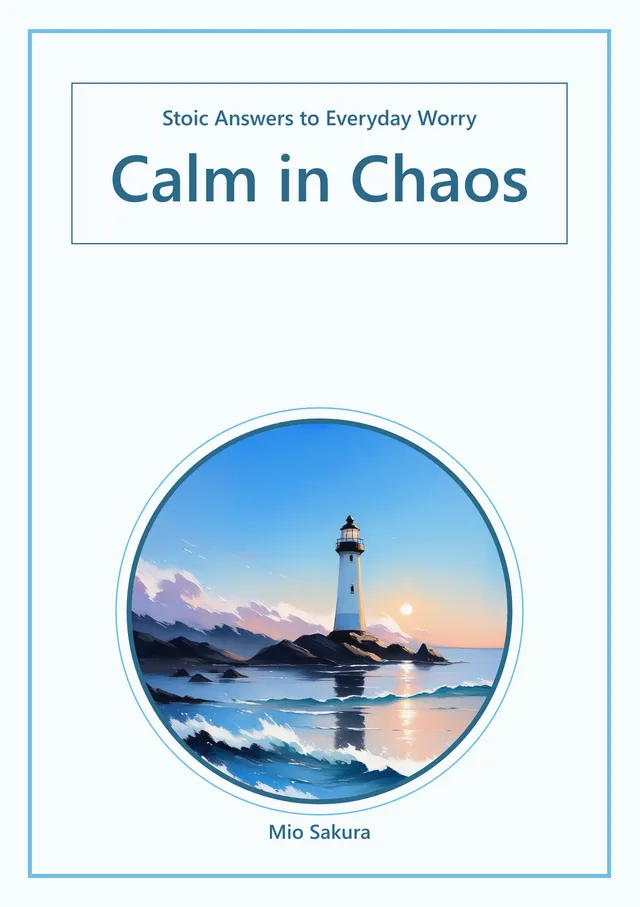 Calm in Chaos
by Mio Sakura
$14.70
 The Art of Not Forcing
by Lin Jingyuan
$14.90
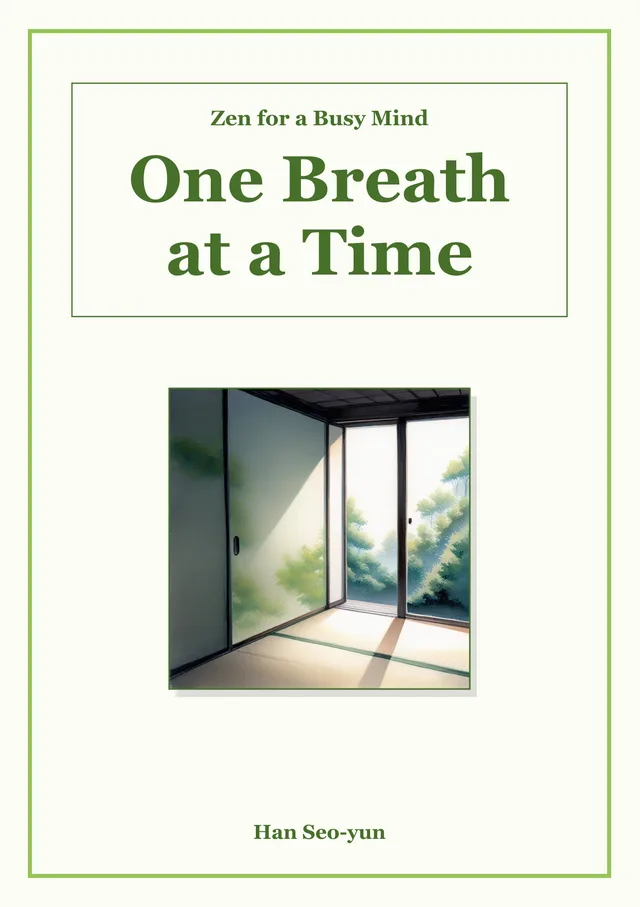 One Breath at a Time
by Han Seo-yun
$15.30
 Letting Go
by Tiago Albuquerque
$15.60
 Check First
by Emma Whitaker
$11.10
 The Year We Became Parents
by Minato Kobayashi
$11.90
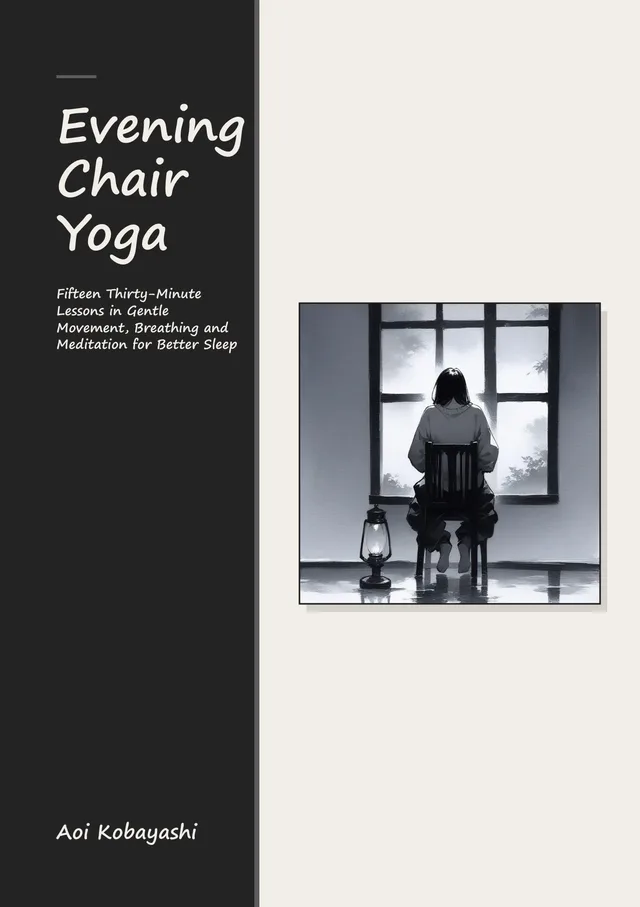 Evening Chair Yoga
by Aoi Kobayashi
$12.30
 How to Keep a Letter Warm
by Nazar Kalugin
$14.50
| Delivery | Read on the web (can be saved for offline reading). Open it from My books after purchase. |
|---|---|
| Refunds and contact | For refunds and cancellations of e-books, please see these pages. 返金について · お問い合わせ · Questions and answers |