A Hundred Slower Evenings
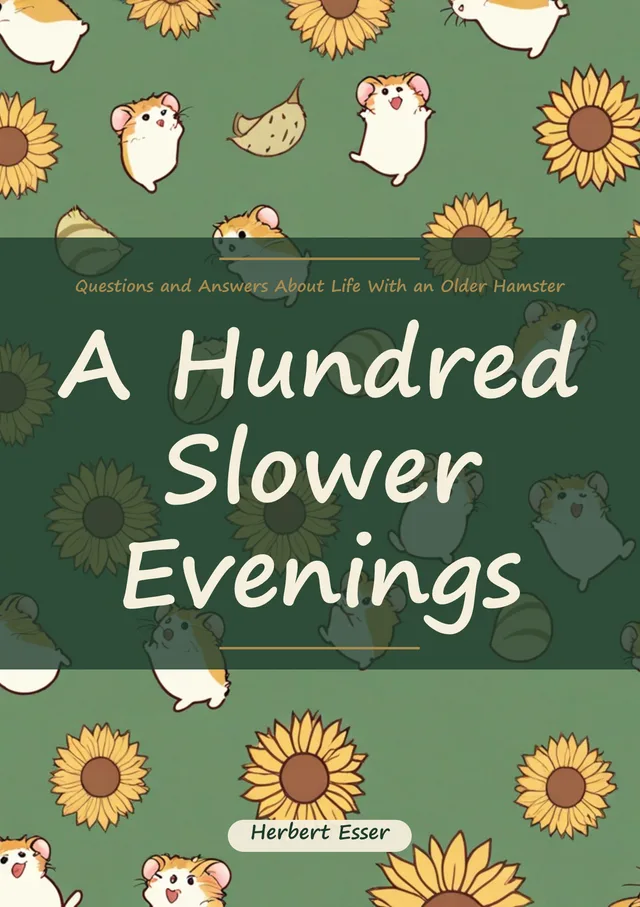
by Herbert Esser

Trinity Books · November 2, 2026

A warm, observant companion for the late years of a small life, built from the questions real keepers ask.

Reading time: About 4 h 20 min (at 230 words a minute)

Read it in another language · 10

Read on the web (can be saved for offline reading). Open it from My books after purchase.

$15.80 tax included

DeliveryIn your bookshelf right after purchase

Length282 pages

You can choose and buy any language edition here (this page stays in your language).

Choose a format

Details

AuthorGermany Herbert Esser
CategoryCaring for pets / Living things and animals
Language of the bookEnglish
PublishedNovember 2, 2026
Length282 pages
Product numberTB-W0011-EN
Reading timeAbout 4 h 20 min (at 230 words a minute)
Print-ready PDFA5 · interior PDF and cover PDF (with bleed: two versions, 3 mm and 3.175 mm, can be downloaded.) · 282 pages

Categories of this book

CategoriesDaily life and practical skillsCaring for pets

CategoriesLearning and general knowledgeLiving things and animals

About this book

You will learn to read the small signs of an older hamster's body and to shape her home, her food, her handling and her days so that the late season of her life is calm and good. Told by a grandfather through the questions his family asks about their golden hamster, Clem, this book answers what animal lovers wonder when the wheel goes quiet, and ends every lesson with clear points to watch.

When the wheel goes quiet at midnight, a family starts asking questions, and finds a gentler way of living with an old friend.

Clem, a golden Syrian hamster, ran her wheel from dusk to dawn for most of her life. Then one winter night it went quiet. Arthur, the grandfather who looks after her in the daytime, began to collect the questions his family asked: why is she sleeping more, why is her bowl still full, is she ill or simply older, and what can we do?

Eighteen lessons follow those questions in order, from the first worried night to a settled, happy routine. Each lesson asks a handful of numbered questions and answers them in a quiet, curious voice, gathers a few shorter questions from one family evening, and closes with points to watch: the signs that belong to age and the signs to show the vet.

Along the way the family lowers the cage to one floor, deepens the bedding, starts a weekly weight chart, packs a visit bag for the clinic, finds small adventures for an older mind and shares the care between grown-ups and children. The back of the book gathers every lesson in brief, a calendar of care and every point to watch in one place.

What this book helps you do

  • Tell the slow, ordinary changes of age from the changes that should go to the vet the same day
  • Keep a simple notebook and a weekly weight chart that show what your eyes alone would miss
  • Rearrange the cage, bedding and play space for slower legs without upsetting a hamster who lives by smell
  • Handle, clean and take an older hamster to the vet with less stress for her and for you
  • Keep an older hamster's mind curious with short, safe adventures close to her nest
  • Share the care as a family and talk about the future honestly, calmly and kindly

Contents

  • A Hundred Slower Evenings
  • Before We Begin
  • Part 1: The Evenings Change
  • Lesson 1: The Wheel Went Quiet: The Night We First Noticed
    1. First: Why did the wheel go quiet?
    2. Second: Who is Clem, and who looks after her?
    3. Third: Is she ill, or is she simply getting older?
    4. Fourth: What did we do on the first morning?
    5. Fifth: Why not simply wait and see?
    6. Questions Around the Table
    7. Points to Watch
  • Lesson 2: How Old Is Old?: Counting a Hamster's Years
    1. First: How long does a Syrian hamster live?
    2. Second: Can we turn hamster months into human years?
    3. Third: When does a hamster become old?
    4. Fourth: Why does such a small body live so fast?
    5. Fifth: Is a dwarf hamster's life any different?
    6. Sixth: What does knowing her age change for us?
    7. Questions Around the Table
    8. Points to Watch
  • Lesson 3: Small Changes, Big Meaning: Reading the Early Signs
    1. First: Why write anything down at all?
    2. Second: What goes in the notebook?
    3. Third: Which changes belong to age?
    4. Fourth: Which changes go straight to the vet?
    5. Fifth: What happened at Dr. Hale's?
    6. Sixth: What changed after the visit?
    7. Questions Around the Table
    8. Points to Watch
  • Part 2: Understanding an Older Body
More
  • Lesson 4: A Body That Keeps Quiet: Why Hamsters Hide Discomfort
    1. First: Why would Clem hide that something is wrong?
    2. Second: How can we watch without frightening her?
    3. Third: What does her posture tell us?
    4. Fourth: What should we notice about how she moves?
    5. Fifth: Why does grooming matter so much?
    6. Sixth: How do we know what is normal for her?
    7. Questions Around the Table
    8. Points to Watch
  • Lesson 5: Teeth and Cheeks: Looking Closely at an Older Mouth
    1. First: Why are her front teeth yellow?
    2. Second: What happens to teeth that never stop growing?
    3. Third: How far do her cheeks really go?
    4. Fourth: How can we look at her mouth without upsetting her?
    5. Fifth: What should she have to gnaw?
    6. Sixth: What did we learn from watching her eat?
    7. Questions Around the Table
    8. Points to Watch
  • Lesson 6: Fur, Skin and Eyes: What Changes on the Outside
    1. First: Why is her fur getting thinner?
    2. Second: What can her skin tell us?
    3. Third: Why do her eyes look cloudy?
    4. Fourth: What are her whiskers for, and do they change?
    5. Fifth: Should an older hamster smell different?
    6. Sixth: How do we check her gently?
    7. Questions Around the Table
    8. Points to Watch
  • Lesson 7: The Hours Between: Sleep, Warmth and an Older Clock
    1. First: Why does Clem sleep so much more now?
    2. Second: Why does she wake at odd hours?
    3. Third: How warm should the room around her be?
    4. Fourth: What does a cold room do to an older hamster?
    5. Fifth: Should we change the light and noise around her day?
    6. Questions Around the Table
    7. Points to Watch
  • Part 3: A Home for Slower Legs
  • Lesson 8: One Floor Instead of Three: Rearranging the Cage
    1. First: Why are high levels a worry now?
    2. Second: What does a fall from a ledge mean for a small body?
    3. Third: How do we take away floors without upsetting her?
    4. Fourth: What makes a good ramp for older legs?
    5. Fifth: Where should food and water sit?
    6. Sixth: How do we know the new layout is working?
    7. Questions Around the Table
    8. Points to Watch
  • Lesson 9: Softer Ground: Bedding, Burrows and Nests
    1. First: Why does deep bedding matter more now?
    2. Second: Should we make the nest for her?
    3. Third: How do we clean without destroying her home?
    4. Fourth: What can the nest tell us?
    5. Fifth: How do we check on her without opening the nest?
    6. Questions Around the Table
    7. Points to Watch
  • Lesson 10: Moving Without Strain: Wheels, Tunnels and Gentle Exercise
    1. First: Why does movement still matter when she is slowing down?
    2. Second: Is her old wheel still safe?
    3. Third: Should we take the wheel away if she rarely uses it?
    4. Fourth: What kind of play suits an older hamster?
    5. Fifth: How much is enough, and how do we know when to stop?
    6. Sixth: What if she does not want to move at all?
    7. Questions Around the Table
    8. Points to Watch
  • Lesson 11: Hands That Wait: Handling an Older Hamster
    1. First: How do we wake her without startling her?
    2. Second: What is the safest way to pick her up?
    3. Third: How long should we hold her now?
    4. Fourth: What are the children's rules?
    5. Fifth: How do we move her for weighing or a visit?
    6. Questions Around the Table
    7. Points to Watch
  • Part 4: Food, Care and Health Checks
  • Lesson 12: When the Bowl Stays Full: Eating as Appetite Changes
    1. First: Is a full bowl always a bad sign?
    2. Second: Why might an older hamster eat differently?
    3. Third: How can we make her usual food easier to eat?
    4. Fourth: How do we watch what she really eats?
    5. Fifth: What should we ask the vet about food?
    6. Sixth: When does a change in eating become urgent?
    7. Questions Around the Table
    8. Points to Watch
  • Lesson 13: Two Numbers on the Fridge: Water and Weight
    1. First: Why weigh her every week, and not just look at her?
    2. Second: How do we weigh a hamster who does not want to sit still?
    3. Third: How can we tell whether she is drinking enough?
    4. Fourth: What change on the chart should take us to the vet?
    5. Fifth: What can we do at home while the line drifts slowly down?
    6. Questions Around the Table
    7. Points to Watch
  • Lesson 14: Clean Without Upset: Hygiene for an Elderly Hamster
    1. First: Why does a big clean upset an old hamster more than it used to?
    2. Second: What does spot cleaning look like on an ordinary day?
    3. Third: How often should the deeper clean come now, and how deep?
    4. Fourth: Can we help her keep her coat clean?
    5. Fifth: What should we do about a dirty or wet bottom?
    6. Sixth: How do we know the gentler rhythm suits her?
    7. Questions Around the Table
    8. Points to Watch
  • Lesson 15: The Visit Bag: Going to the Vet With Notes and Questions
    1. First: What goes into the visit bag?
    2. Second: How do we keep her warm and calm on the way?
    3. Third: What does Dr. Hale do, and what should we tell her?
    4. Fourth: Which questions are worth asking?
    5. Fifth: What do we do when we come home?
    6. Questions Around the Table
    7. Points to Watch
  • Part 5: A Good Late Life
  • Lesson 16: Small Adventures: Keeping an Older Mind Busy
    1. First: Does an old hamster still need things to do?
    2. Second: How does scatter feeding work for a hamster who moves slowly?
    3. Third: Why does smell matter so much, and how can we use it?
    4. Fourth: What new textures are safe and kind to offer?
    5. Fifth: How long should play last, and how do we know when to stop?
    6. Sixth: How can the whole family share her adventures without crowding her?
    7. Questions Around the Table
    8. Points to Watch
  • Lesson 17: Many Hands, One Hamster: Sharing the Care as a Family
    1. First: Who does what, and why write it down?
    2. Second: What can the children do, and what should they leave to the grown-ups?
    3. Third: What happens when one of us is away or busy?
    4. Fourth: How do we handle the feelings in the family?
    5. Fifth: How do we talk about the future, honestly and kindly?
    6. Questions Around the Table
    7. Points to Watch
  • Lesson 18: One Evening at a Time: A Calm Routine for the Late Season
    1. First: What does a settled routine look like for her now?
    2. Second: How do we know whether she is having a good life?
    3. Third: Why notice the good days, and how do we do it?
    4. Fourth: What changes should still go to the vet, even now?
    5. Fifth: How can we be ready for the end without being afraid?
    6. Sixth: What does an ordinary good evening feel like now?
    7. Questions Around the Table
    8. Points to Watch
  • The Lessons in Brief
  • A Calendar for Her Late Season
  • Every Point to Watch in One Place
  • Where to Turn
  • Colophon

From the publisher

A warm, observant companion for the late years of a small life, built from the questions real keepers ask.

A hamster's old age comes quickly, often within a few months, and it can catch even experienced animal lovers unprepared. This book meets that moment with patience. Instead of a list of rules, it follows one family and one hamster through the questions they actually asked, so that each answer arrives with a reason and a scene.

The narrator watches closely and wonders aloud, and his curiosity is catching. Small facts, such as a heart that beats several hundred times a minute or front teeth that are meant to be yellow, become ways of seeing the animal in the cage more clearly, and everyday comparisons make them easy to remember.

The practical chapters are especially useful: taking away high floors one at a time, cleaning in halves so that a cage still smells like home, weighing a hamster who will not sit still, and packing a calm visit bag with notes and questions for the vet.

Throughout, the book is careful to send every worrying sign to the vet, and the closing lessons treat the family's own feelings with real tenderness. It is a book about paying attention, and about how much good attention can give a small animal in her last season.

What we like

  • Eighteen lessons in question-and-answer form, each ending with points to watch
  • A clear line between the ordinary signs of age and the signs to show the vet
  • Practical changes to the cage, bedding, handling, cleaning and play for older legs
  • A care calendar and every point to watch gathered at the back of the book

Recommended for

  • Animal lovers whose hamster is growing old, or who want to be ready when that time comes
  • Families who share the care of a small pet and want the children to take part safely
  • Keepers who like to understand the reasons behind good care, not only the steps

If you are concerned about your hamster, see a vet.

Read it in another language

You can buy any language edition on this page: choose it under “Language of the book” in the buy box above. Each language also has its own page.

Refunds and contact

DeliveryRead on the web (can be saved for offline reading). Open it from My books after purchase.
Refunds and contactFor refunds and cancellations of e-books, please see these pages. 返金について · お問い合わせ · Questions and answers