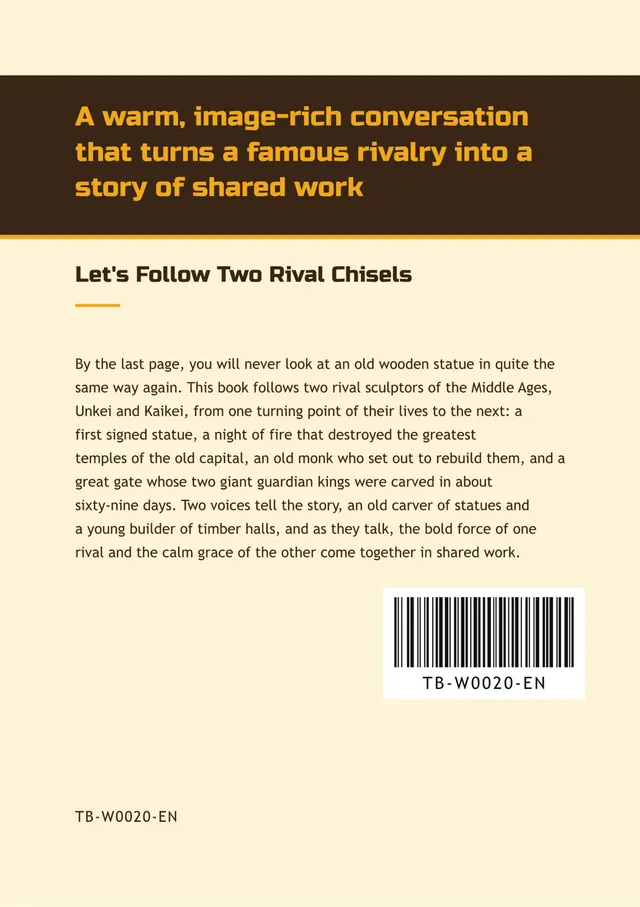
Let's Follow Two Rival Chisels

by Yvonne Courtin

Trinity Books · November 15, 2026

A warm, image-rich conversation that turns a famous rivalry into a story of shared work

Reading time: About 3 h 20 min (at 230 words a minute)

Read it in another language · 10

Read on the web (can be saved for offline reading). Open it from My books after purchase.

$11.70 tax included

DeliveryIn your bookshelf right after purchase

Length208 pages

You can choose and buy any language edition here (this page stays in your language).

Choose a format

Distributing, publishing or selling the content of a book to others makes you liable for a penalty of 2,000,000 yen under the Terms.

With Trinity MemberMonthly membership, you can also keep books you have not bought on your bookshelf. About Trinity Member

Details

AuthorFrance Yvonne Courtin
CategoryBiographies of great people / Art history / Architecture / Introduction to history
Language of the bookEnglish
PublishedNovember 15, 2026
Length208 pages
Product numberTB-W0020-EN
Reading timeAbout 3 h 20 min (at 230 words a minute)
Print-ready PDFA5 (148 × 210 mm) · interior PDF and cover PDF

Categories of this book

CategoriesLearning and general knowledgeBiographies of great people

CategoriesLearning and general knowledgeArt history

CategoriesLearning and general knowledgeArchitecture

CategoriesLearning and general knowledgeIntroduction to history

About this book

By the last page, you will never look at an old wooden statue in quite the same way again. This book follows two rival sculptors of the Middle Ages, Unkei and Kaikei, from one turning point of their lives to the next: a first signed statue, a night of fire that destroyed the greatest temples of the old capital, an old monk who set out to rebuild them, and a great gate whose two giant guardian kings were carved in about sixty-nine days. Two voices tell the story, an old carver of statues and a young builder of timber halls, and as they talk, the bold force of one rival and the calm grace of the other come together in shared work.

Two rival chisels, one burned temple, and the long work of raising it again.

Unkei carved wood that seems to breathe, with weight, muscle and a stare that follows you across a hall. Kaikei carved figures so calm and graceful that visitors lower their voices without knowing why. They came from the same workshop line, competed for honour and ranks, and still found themselves on the same scaffolds when a whole realm needed their hands.

This book tells their lives through fourteen turning points in time order, from Unkei's first signed statue to the great gate that both rivals helped to fill. Along the way you meet the old monk Chōgen, who took up a begging bowl at sixty-one, a caster from across the sea, warrior patrons, court workshops and the sons and pupils who carried the two styles forward.

The story is told as a conversation between two voices: an old carver who has spent fifty years mending wooden statues, and a young builder learning to raise timber halls. One explains chisels, joined blocks and crystal eyes; the other explains beams, brackets and giant logs floated down rivers. Where records are silent, the book says so, and imagined scenes are marked as imagined.

What you will carry away from these pages

  • Follow the lives of Unkei and Kaikei through the turning points that shaped their work.
  • See how wooden statues were made from joined blocks, with crystal eyes, gold and lacquer.
  • Understand how a burned temple was rebuilt with timber from far forests and a bold new way of building.
  • Tell the forceful style of Unkei from the calm style of Kaikei, and see where the two meet.
  • Learn what inscriptions found inside the statues reveal about the people who made them.
  • Weigh both sides of the old question of which rival was the greater artist.
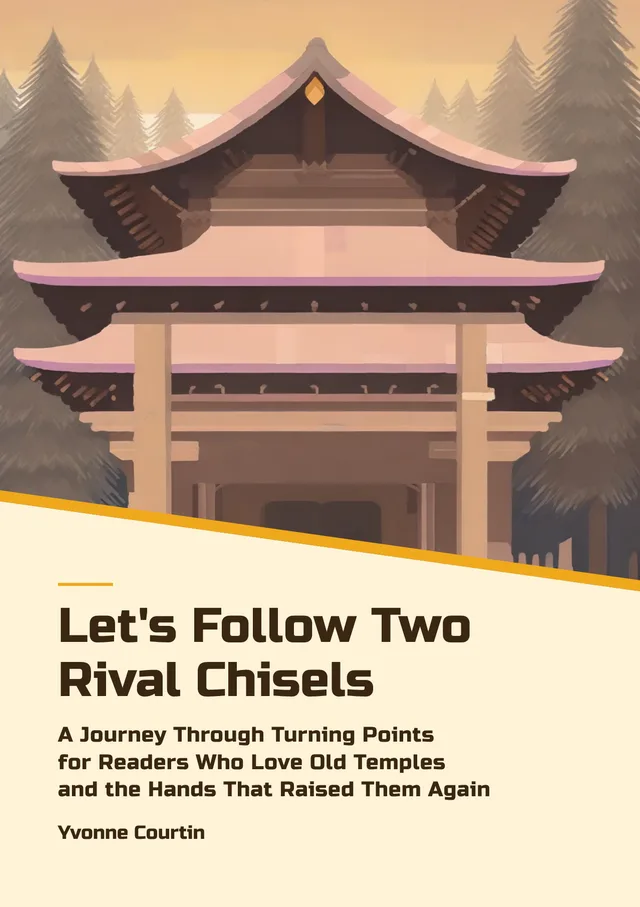
Contents

  • Let's Follow Two Rival Chisels
  • A Map of This Book
  • Part 1: Ashes and Apprentices
  • Chapter 1: The First Signature: A Young Carver Shows His Hand
    1. Who Was the Young Man Behind the Great Sun Buddha?
    2. How Do You Build a Buddha from Many Blocks?
    3. Why Did a Workshop in the Old Capital Need to Prove Itself?
  • Chapter 2: The Night the Halls Burned: Fire Comes to the Old Capital
    1. Why Did Soldiers March on a City of Temples?
    2. What Burned, and What Survived the Night?
    3. Was the Fire Meant to Spread So Far?
  • Chapter 3: An Old Monk Picks Up a Begging Bowl: Chōgen and the Caster from Across the Sea
    1. Who Would Ask a Whole Realm for Help?
    2. How Do You Mend a Bronze Giant's Head?
    3. Where Did the Old-Capital Carvers Stand While the Court Workshops Shone?
More
  • Chapter 4: Two Names on One Sutra: Kaikei Steps into the Record
    1. What Is a Vow Sutra, and Why Copy One?
    2. Where Did Kaikei Come From?
    3. Can Two Opposite Tempers Share One Bench?
  • Chapter 5: Statues for Warriors in the East: Unkei Finds New Patrons
    1. Why Would a Warrior Want a Carver from the Old Capital?
    2. What Did the Warriors See in These New Statues?
    3. Did Unkei Change His Style, or Did the Times Change Around Him?
  • Chapter 6: A Calm Face for a Restless Age: Kaikei's Maitreya and His Vow
    1. What Could a Quiet Face Say in a Year of Upheaval?
    2. Why Would a Carver Sign with the Name of a Buddha?
    3. How Do You Make a Statue Wait for the Sunset?
  • Part 2: The Great Rebuilding and After
  • Chapter 7: The Great Hall Rises Again: Four Workshops and One Giant Task
    1. How Does a Forest Become a Hall?
    2. What Is So New About the Great Buddha Style?
    3. Can Four Rival Teams Share One Hall?
  • Chapter 8: Sixty-Nine Days: The Guardian Kings of the Great South Gate
    1. Why Does a Gate Need So Many Beams?
    2. How Do You Carve Two Giants in Sixty-Nine Days?
    3. Whose Hand Is in Which King?
  • Chapter 9: A God Dressed as a Monk: Kaikei and the Last Years of Chōgen
    1. Why Would a God Wear a Monk's Robe?
    2. What Did the Carver and the Old Monk Give Each Other?
    3. Who Carved the Face of the Old Monk?
  • Chapter 10: Two Brothers in Wood: Unkei's Masterpiece for the Northern Hall
    1. What Does an Eight-Sided Hall Ask of the Statues Inside It?
    2. How Do You Carve the Face of a Man Who Died Centuries Before?
    3. Who Held the Chisels While the Father's Name Stood Above Them?
  • Chapter 11: Three Feet of Stillness: How Kaikei's Style Spread
    1. Why Would a Master Choose to Work at Three Feet?
    2. What Made His Manner Easy to Follow and Hard to Equal?
    3. Did Ranks Matter to a Man Who Signed Himself a Servant of Amida?
  • Chapter 12: The Workshop Passes On: Unkei's Last Years
    1. Why Would a Son Carve a Demon Who Carries Light?
    2. Whom Did the Old Master Carve For in His Final Years?
    3. What Remains When the Master's Hands Grow Still?
  • Chapter 13: Ten Disciples and a Fading Signature: Kaikei's Final Works
    1. How Do You Give Ten Holy Men Ten Different Faces?
    2. What Does It Mean When a Work Is Only Attributed?
    3. Where Does a Craftsman Go When the Records Stop?
  • Chapter 14: Two Chisels, One Gate: What the Rivals Left Behind
    1. How Does an Old Son Close the Circle His Father Drew?
    2. What Did Fire and Time Take, and What Did They Spare?
    3. Who Was the Greater Carver, and Does the Question Still Matter?
  • Afterword
  • Glossary
  • Where This Knowledge Comes From
  • Index
  • Colophon

From the publisher

A warm, image-rich conversation that turns a famous rivalry into a story of shared work

The two voices are the book's great pleasure. The old carver brings the patience of the workshop, the young builder brings the eye of the scaffold, and their gentle differences mirror the rivals they are talking about.

Each chapter stands on one turning point, so the lives unfold clearly: the first signature, the fire, the begging bowl, the warrior patrons, the vow, the great hall, the sixty-nine days at the gate, the masterpieces of old age and the quiet fading of a famous name.

The craft is explained with real care. Joined-block carving, crystal eyes, penetrating tie-beams and logs carried from distant forests become vivid without ever slowing the story down.

Where scholars disagree, both readings are laid side by side, and the book never pretends to know more than the records show. The result feels honest, curious and generous to both rivals.

What we like

  • Fourteen turning points in time order, from a first signed statue to the masters' last works.
  • Told as a conversation between an old statue carver and a young timber builder.
  • Clear explanations of carving and building techniques, with key words gathered for quick reference.
  • Imagined scenes are clearly marked, and differing views are given side by side.

Recommended for

  • Readers who love old temples, wooden statues and the history of art.
  • Anyone who works with their hands and enjoys the stories of craftspeople.
  • Readers who like true stories of rivals who learned to work together.

Read it in another language

You can buy any language edition on this page: choose it under “Language of the book” in the buy box above. Each language also has its own page.

Refunds and contact

DeliveryRead on the web (can be saved for offline reading). Open it from My books after purchase.
Refunds and contactFor refunds and cancellations of e-books, please see these pages. 返金について · お問い合わせ · Questions and answers